Spending More on Festive Ads but Getting Fewer Results? Fix These 5 Things.
In India, the festive season is a goldmine of opportunities, but with opportunities come challenges and competition. Companies compete fiercely. Marketing budgets swell. Campaigns run at full speed. Discounts float everywhere!
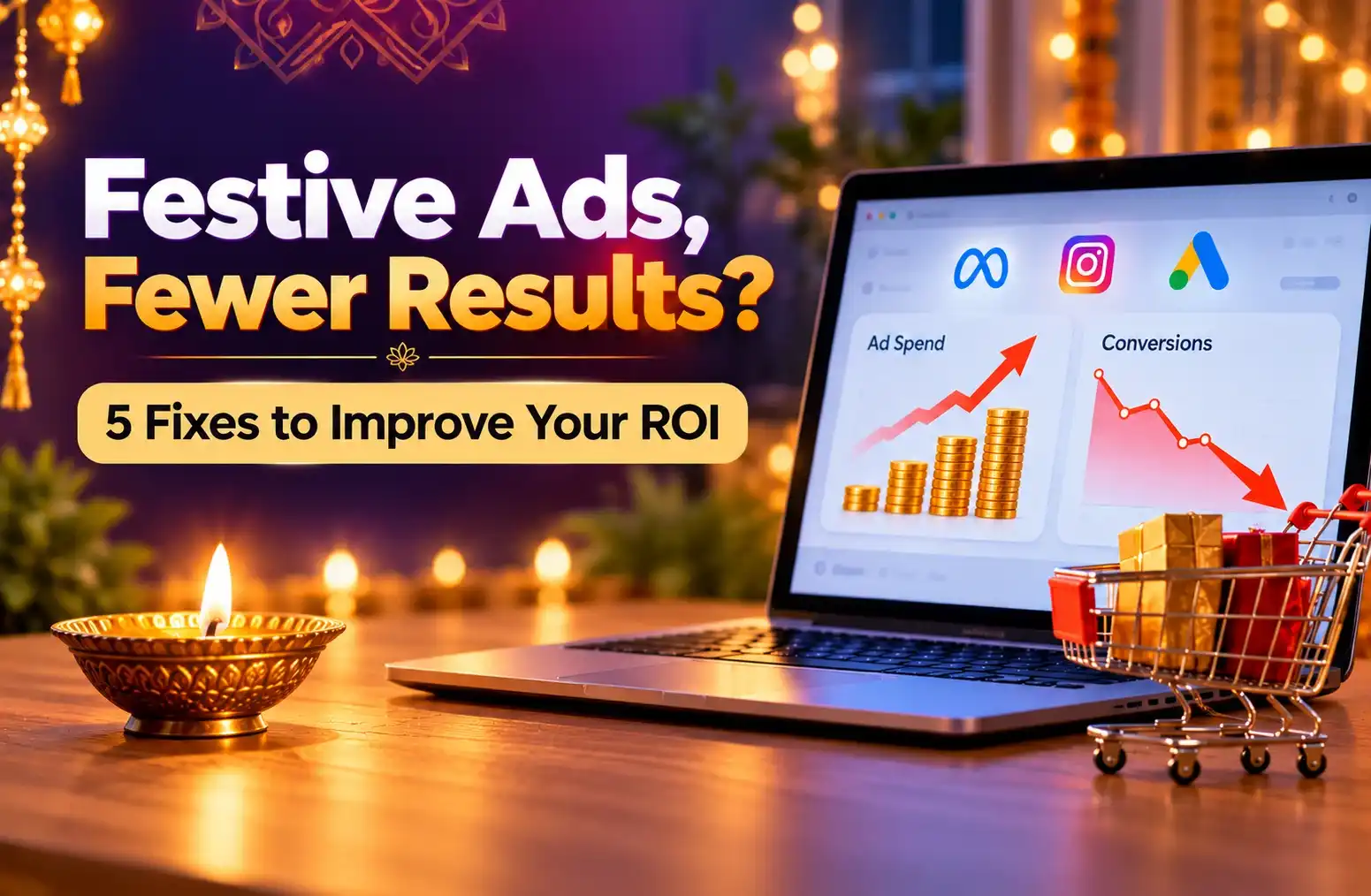
Amidst this, a marketing team watches the dashboard move. Leads are clocking in, but very few, almost none, get converted into a sale. Customer acquisition costs keep rising. Conversions: none! If you think you are in a similar situation – your festive Facebook ad spend is surging while the ROI is shrinking – you must think differently and fix some essential aspects.
1. Stop Targeting Everyone Who Might Buy
Companies usually attempt to reach everyone (or as many people as possible) during the festive season. Obvious and therefore understood. But here’s the catch. A larger audience doesn’t necessarily mean more prospects. Broad targeting refers to net fishing. It can consume your budget on people with little buying intent and yet not yield the desired outcome.
So, what to fix here? The key is targeted outreach. Segment your audience based on their purchase history, browsing behaviour, location, interests and previous interactions with your brand. Create separate campaigns for new prospects, existing customers and people with a proven buying intent.
For instance, A Pune-based jewellery store runs Diwali ads across Maharashtra, attracting plenty of clicks but few purchases. So, it refined its strategy by creating separate campaigns for nearby shoppers and previous customers with personalised festive offers to drive more qualified enquiries.
2. Refresh Creatives Before Ad Fatigue Sets In
Repetition leads to ignorance. When people come across the same ad repeatedly, they begin ignoring it.
So, what should you fix here? Monitor click-through rates, conversion rates and frequency. Examine different visuals, headlines, formats and calls to action instead of repeatedly increasing the budget on an underperforming ad.
For example, a clothing brand runs the same Diwali collection ad for three weeks. Initially, it engages effectively. However, gradually, clicks begin declining. Here, you can experiment with short styling videos, customer testimonials and product-specific creatives to encourage fresh engagement.
3. Make Your Offer Worth Acting On
Festive discounts are common. Every brand offers some. Amidst so many offers, if you also offer the same 10-12% discount, customers may have little reason to choose you. So, does that mean you must offer higher discounts? Not really. Then, what’s the fix here? It is strategic.
Highlight a clear customer benefit beyond price. Based on your business, this could include a useful product bundle, complimentary delivery, limited-period service benefits, exclusive designs or a convenient purchase experience. You don’t have to increase the discount. People love brands that complement discounts with some value-add service.
For example, an electronics retailer advertises a flat 10% discount on home appliances. The ad doesn’t work. Later, it tests a festive bundle featuring an appliance, free installation and an extended service benefit. Prospects resonate with the added convenience more than the discount.
4. Fix the Landing Page Before Buying More Traffic
This happens pretty frequently. An ad attracts the right audience, yet it fails to engage as its destination page creates friction. Remember, slow loading, unclear pricing, complicated forms, missing product details or a poor mobile experience can drive interested visitors away.
To fix this concern, you must check the page’s mobile loading speed, simplify navigation, make the offer prominent and ensure the landing page matches the advertisement. Whether it’s purchasing, booking a consultation or submitting an enquiry, always keep the next step obvious.
For example, a festive home-interior campaign generates hundreds of clicks, but very few leads. Why? The landing page has a lengthy enquiry form asking for unnecessary details. Upon analysing the reasons for bouncing off, the business cuts the form size, reducing it to only essential information and adding a clear consultation-booking option to improve completion rates.
5. Don’t Confuse Clicks With Business Results
High impressions, likes and clicks can indicate strong campaign engagement. However, these metrics alone don’t always reflect the overall business impact of an advertising campaign.
The fix here? You must track meaningful conversions, including qualified leads, purchases, cost per acquisition and return on ad spend (ROAS). Check whether conversion tracking works correctly across platforms, websites and checkout processes. Where possible, compare lead quality and actual sales rather than relying solely on platform-reported results.
For instance, A B2B company receives 100 festive campaign enquiries through Facebook ads but converts only two of them. Another campaign generates only 50 enquiries. But out of them, ten convert. The second campaign has attracted fewer leads but with a stronger conversion rate. Such campaigns deserve more investment and attention.
Final Thoughts
Higher ad spend doesn’t necessarily mean more business and revenue. In today’s heavily digital environment, where you invest matters more than how much you invest. If you also resonate with this idea and want to fix your festive Meta Ads, PJP Digital is here to help.
We are a young team of professionals with a flair for social media strategy and proven results across multiple brands. So, whether you want to fix Instagram ads or those on Facebook, we’ve got you. Email us at ping@pjpdigital.com.
FAQs
Should I increase my festive advertising budget?
You should only when you’ve seen your campaign generate profitable sales or qualified leads. You must fix conversion problems before scaling.
How often should I optimise festive ad campaigns?
The key to optimising festive ad campaigns is reviewing campaigns regularly across critical parameters to make changes based on sufficient data.
Which metric matters most for festive ads?
It depends on the objectives. For instance, an eCommerce business would monitor purchases, acquisition costs and ROAS. On the other hand, lead-gen businesses must prioritise qualified leads and customer acquisition costs.