One-Page Website vs Multi-Page Website: What Does Your Business Actually Need?
Many businesses spend thousands to several lakhs on a website before answering one important question:
“Will this website still support my business two or three years from now?”
It’s easy to compare prices, layouts or design trends, but the real decision isn’t about how your website looks, It’s about how well it supports your business goals.
Your website is more than an online brochure, it’s often the first place potential customers learn about your business, compare your services with other providers and decide whether to contact you. The website structure you choose today can influence your online visibility, your ability to generate leads or drive sales, user experience and even the cost of expanding your business in the future.
That’s why the question shouldn’t be:
“Should I build a One-Page Website or a Multi-Page Website?”
Instead, ask:
“Which website structure will help my business grow?”
The answer depends on your business model, marketing strategy and future plans, not simply on your budget.
Most Businesses Ask the Wrong Question
One of the biggest mistakes business owners make is choosing a website based on today’s requirements instead of tomorrow’s opportunities.
Questions like these often lead to the wrong decision:
- Which website is cheaper?
- Which design looks better?
- Can I launch the website quickly?
While these are valid considerations, they don’t determine whether your website will continue supporting your business as it grows.
Instead, ask yourself:
- Will I introduce new services next year?
- Do I want customers to find me through Google Search?
- Will customers need detailed information before making a purchase?
- Do I expect my business to expand into new locations or markets?
Your answers will usually point you toward the right website structure.
Think About Your Business Before Thinking About Your Website
Every business has different digital marketing goals, so there isn’t a one-size-fits-all solution.
For example, imagine you’re launching a startup with one flagship product. Your immediate goal may be to collect enquiries or validate your business idea. In this case, a one page website can keep visitors focused on a single message and encourage quick conversions.
Now consider a manufacturing company offering multiple products across different industries. Potential customers may want technical specifications, industry applications, certifications, FAQs and case studies before contacting you. Trying to present all this information on one page creates a poor user experience and limits your ability to rank for different search terms.
The same applies to healthcare providers, educational institutes, real estate companies, interior designers and digital marketing agencies. As your services grow, customers expect dedicated pages that answer their specific questions.
The right website isn’t the one with fewer or more pages, it’s the one that matches how your customers search, compare and make decisions.
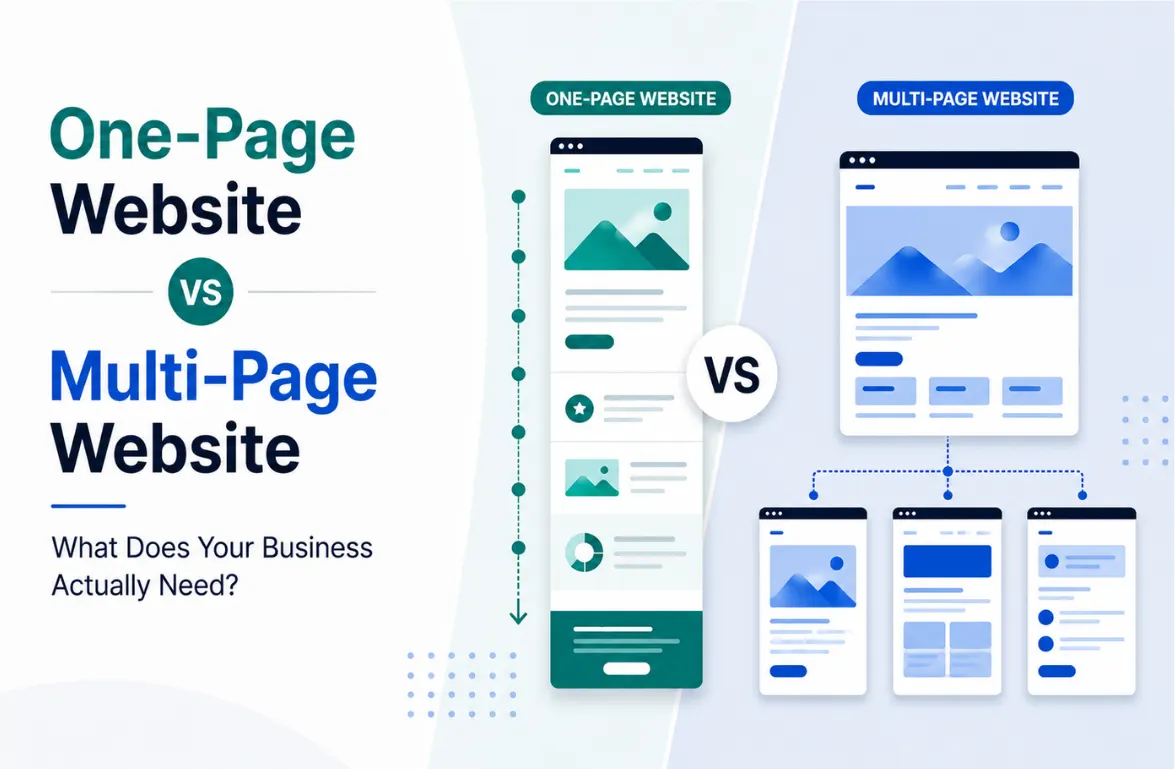
One-Page Website vs Multi-Page Website: What’s the Difference?
When comparing a one-page website vs multi-page website, the number of pages isn’t what matters most. The real difference lies in how each structure supports your marketing strategy, customer journey and future business growth.
| Feature | One-Page Website | Multi-Page Website |
| Best For | One service, portfolio or landing pages | Businesses with multiple services or products |
| User Journey | Focused on one conversion goal | Different journeys for different customer needs |
| SEO Potential | Best for one primary topic | Better for multiple keywords and services |
| Content Growth | Limited | Easy to add blogs, case studies, FAQs and new pages |
| Scalability | Suitable for short-term needs | Designed for long-term business growth |
| Maintenance | Simple | Requires regular updates but offers greater flexibility |
Neither option is universally better. The right choice depends on how customers interact with your business and where you want your business to be in the future.
Which Website Will Help You Generate More Leads or Sales?
This is where many businesses overlook one important factor: generating leads or increasing sales depends on how customers find you.
If most of your customers come from referrals, social media, WhatsApp or paid advertising, a one-page website can work well because visitors are guided towards one clear action, such as submitting an enquiry form, making a phone call or completing a purchase.
However, if your goal is to attract customers through Google Search, a multi-page website usually delivers better long-term results.
Why?
Because each page can answer a different customer question.
For example, instead of one general page about your business, you can create dedicated pages for each service, industry or location. This makes it easier for search engines to understand your expertise while helping visitors quickly find the information they need.
Instead of trying to rank one page for everything, you’re creating multiple opportunities to attract qualified visitors, generate enquiries, increase sales and grow your business.
The Biggest Mistake Businesses Make
One of the most common mistakes isn’t choosing a one-page website.
It’s choosing one without thinking about future growth.
We’ve seen businesses launch with one service and a simple website because it met their immediate needs. Within a year, they introduced new services, invested in SEO, started publishing blogs and launched Google Ads campaigns.
Suddenly, the website that once looked clean became crowded.
Everything had to fit on one page.
Navigation became confusing.
SEO opportunities were limited.
Visitors struggled to find relevant information.
Eventually, the business needed a complete redesign, an investment that could often have been avoided with better planning.
Building the right website isn’t about spending more today, it’s about avoiding unnecessary costs tomorrow.
So… What Does Your Business Actually Need?
Choose a One-Page Website if:
- You have one core service or product.
- You need a fast online presence.
- Your marketing relies mainly on referrals or paid campaigns.
- Your goal is to drive visitors towards one clear action.
Choose a Multi-Page Website if:
- You offer multiple services or products.
- You want to improve your visibility in Google search results.
- You plan to publish blogs, case studies or resources.
- Your customers need detailed information before making a decision.
- You expect your business to grow over time.
There isn’t a universal winner in the one-page website vs multi-page website debate. The best choice is the one that supports your business goals, not just today’s requirements but tomorrow’s opportunities as well.
Make Your Website Work for Your Business
A website is one of the most important investments a business makes. Choosing the right structure from the beginning can improve user experience, strengthen your SEO strategy and reduce the need for costly redesigns in the future.
At PJP Digital, we don’t recommend the same solution for every client. We first understand your business, target audience, growth plans and digital marketing goals before recommending the right website structure.
If you’re looking for a website development company that builds websites based on your business goals rather than just design trends, our team can help, whether you’re launching your first website or redesigning an existing one. PJP Digital creates high-performing websites that generate enquiries or sales, support SEO and grow with your business.