
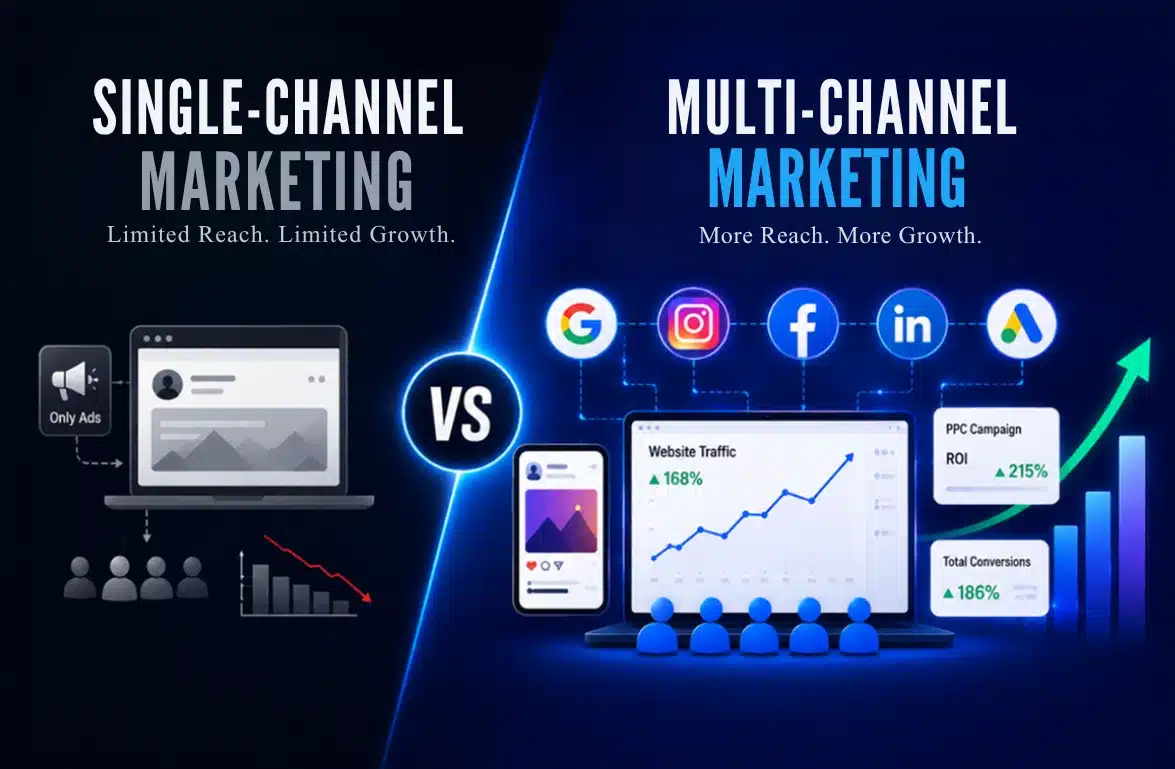
Why Multi-Channel Marketing Works Better Than Single-Channel Marketing?
In today’s competitive online landscape, relying on just one marketing channel is no longer enough. Customers interact with businesses through multiple digital touchpoints before making a decision. They may discover a brand on Instagram, search for it on Google, visit its website, read reviews and later respond to a paid advertisement or email campaign.
This is why a strong digital marketing strategy now focuses on multiple channels instead of a single channel. Businesses using SEO, Social Media, Paid Advertising and Content Marketing together often achieve better visibility, stronger customer trust and higher conversions.
For startups, local businesses and growing brands, PJP Digital designs integrated marketing strategies that help businesses build stronger visibility across multiple digital channels.
What Is Multi-Channel Marketing?
Multi-channel marketing means promoting a business across various digital channels instead of depending on just one. These channels may include:
- Search engines
- Social media channels
- Paid advertising
- Email marketing
For example, a customer may first become aware of a brand online and later take action after multiple interactions across different marketing channels.
This connected customer journey is becoming more common in 2026 because consumers switch between channels constantly before purchasing.
PJP Digital offering Digital Marketing Services often combine SEO, Social Media and paid Campaigns together because each channel supports different stages of the customer journey.
Why Single-Channel Marketing Has Limitations?
Single-channel marketing focuses only on one channel, such as Social Media or SEO.
While this may generate short-term results, it creates several risks.
Limited Audience Reach
Not all users spend time on the same channel. Some people search on Google, while others discover brands through Instagram, LinkedIn or YouTube.
A business using only one channel misses potential customers active elsewhere.
Algorithm Dependency
Channels regularly change their algorithms and policies. A Google update may reduce website rankings, while a social channel may lower organic reach overnight.
Businesses depending on one channel can lose visibility quickly.
Reduced Customer Trust
Today’s customers often research businesses across multiple channels before making a purchase. If a brand only appears in one place, customers may question its credibility.
Higher Long-Term Risk
Paid ads stop generating traffic when the budget stops. Organic social reach can fluctuate. Depending on a single source creates instability for long-term growth.
A diversified digital marketing strategy helps reduce these risks by building visibility across several channels.
Single-Channel Marketing vs Multi-Channel Marketing
|
Factor |
Single-Channel Marketing |
Multi-Channel Marketing |
| Audience Reach | Limited to one channel | Wider audience across channels |
| Business Risk | High dependency on one channel | Diversified and stable |
| Brand Visibility | Limited exposure | Stronger online presence |
| Customer Trust | Lower credibility | Higher trust through repeated visibility |
| Lead Generation | Inconsistent | Multiple conversion opportunities |
| ROI Potential | Short-term focused | Better long-term ROI |
| Growth Stability | Vulnerable to algorithm changes | More sustainable growth |
| Customer Journey Support | Incomplete | Supports multiple touchpoints |
How SEO, Social Media & Paid Ads Work Together?
One of the biggest advantages of multi-channel marketing is how different channels complement each other.
SEO Builds Long-Term Visibility
Professional SEO services help businesses appear in search engine results when customers actively search for products or services.
Strong search engine optimization services improve:
- Website visibility
- Organic traffic
- Brand authority
- Long-term discoverability
Unlike paid ads, SEO can continue driving traffic over time without daily ad spending.
Social Media Creates Engagement
Social media services help brands connect directly with audiences.
Channels like Instagram, Facebook and LinkedIn support:
- Brand awareness
- Customer interaction
- Content distribution
- Community building
Businesses that consistently post valuable content often build stronger audience relationships.
Paid Advertising Delivers Quick Results
Social media advertising and paid search campaigns help businesses generate immediate visibility.
Paid ads are useful for:
- Product launches
- Lead generation
- Retargeting campaigns
- Promotional offers
- Audience testing
While SEO builds long-term authority, paid advertising provides faster traffic and measurable reach.
The Combined Effect Is Stronger
When SEO, social media and paid campaigns work together, businesses create multiple customer touchpoints.
Research shows brands using diversified marketing strategies across multiple channels can improve web sales by 2–5% through overlapping impressions and repeated exposure. Multi-channel campaigns also tend to generate higher ROI compared to single-channel efforts because customers engage with brands more frequently before converting.
This is why businesses increasingly prefer an Online Marketing Agency that can manage SEO, paid advertising and social media together under one strategy. PJP Digital focuses on creating connected marketing systems instead of isolated campaigns.
Why Customers Trust Brands Visible Across Multiple Channels?
Trust plays a major role in digital marketing success.
Customers are more likely to trust businesses that appear consistently across multiple channels.
For example, users feel more confident when they see:
- A professional website
- Active social media profiles
- Positive customer reviews
- Helpful blog content
- Consistent branding
- Regular audience engagement
A business with strong digital visibility appears more reliable and established.
Repeated exposure also improves brand recall. Customers often remember businesses they encounter multiple times across search engines, websites and social channels.
This is especially important in competitive industries where trust directly influences purchasing decisions.
Benefits of a Strong Digital Marketing Strategy
A well-planned digital marketing strategy offers several advantages for businesses today.
Better Brand Visibility
Multi-channel marketing increases the chances of reaching customers across different online environments.
Higher Lead Generation
Businesses create more conversion opportunities when customers interact with multiple channels.
Improved Customer Experience
Customers can discover, research and contact businesses through their preferred channels.
More Stable Growth
Traffic sources become diversified instead of relying on one algorithm or channel.
Better ROI
Coordinated campaigns often produce stronger long-term returns than isolated marketing efforts.
Stronger Competitive Position
Businesses active across SEO, content marketing, paid advertising and social media usually outperform competitors using only one marketing channel.
Conclusion
Today’s customers no longer follow a single path before making a purchase. They search, compare, engage and research businesses across multiple channels. Because of this shift, businesses need more than one channel to remain visible and competitive.
A strong digital marketing strategy that combines SEO, social media, paid advertising and content marketing helps businesses build trust, improve visibility and generate better long-term results.
Whether you are a startup, local brand or growing company, investing in integrated Digital Marketing Services can create more stable and scalable business growth.
Businesses searching for a trusted Digital Marketing Agency in Pune or an experienced Digital Marketing Company in Pune should focus on building a connected marketing ecosystem instead of relying on a single channel. PJP Digital helps businesses create long-term digital visibility through integrated SEO, social media and performance marketing strategies.
FAQs
1. What is multi-channel marketing?
Multi-channel marketing is the use of multiple digital channels such as websites, social media and paid advertising to promote a business.
2. Why is single-channel marketing risky?
Single-channelmarketing creates dependency on one channel’s algorithm, reach or advertising system, increasing long-term business risk.
3. Which channels should businesses use for multi-channel marketing?
Businesses should use channels based on their audience and goals. Common channels include Google Search, Instagram, Facebook, LinkedIn, YouTube, websites and email marketing.
4. How does multi-channel marketing improve ROI?
Multi-channel marketing increases customer touchpoints, improves brand recall and creates more opportunities for conversion, resulting in better long-term ROI.
2 Comments
This post made me think about things in a completely different way 🌟
Great content! Keep up the good work!